Ask any long-time desert tour guide in the UAE where they'd choose to ride, and Al Badayer — the Red Dunes — comes up constantly. Here's what actually makes this stretch of desert stand out.
Short answer: Al Badayer's Red Dunes offer a deeper, more saturated red-orange sand colour, a wider and more varied dune field than closer alternatives, and lower crowd density — combined with 14+ years of licensed operator presence, including ours, that has built real local expertise in the terrain.
The colour: genuinely deeper red sand
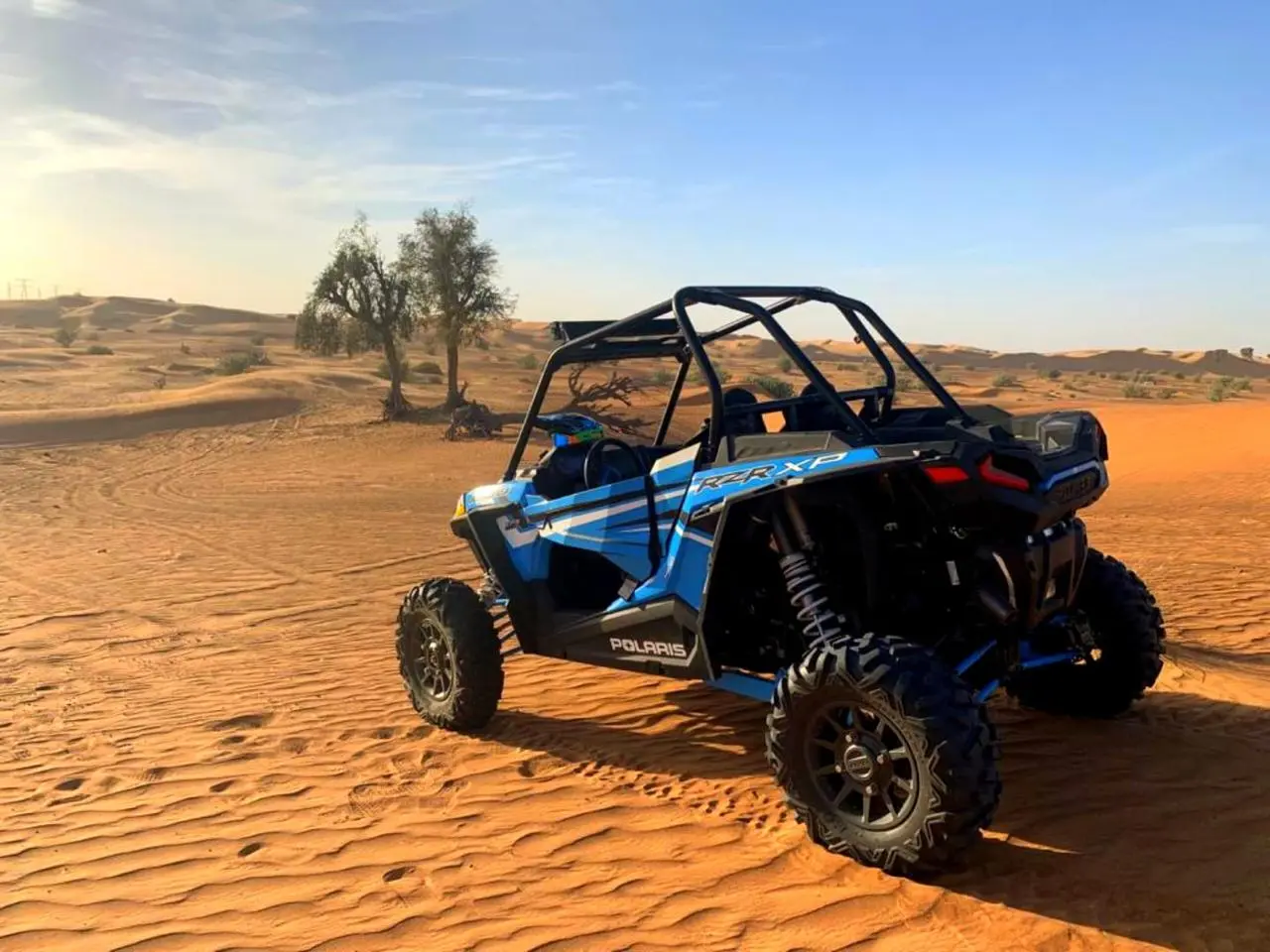
Al Badayer's dunes carry a noticeably deeper red-orange tone than much of the terrain closer to central Dubai, especially in the golden-hour light of sunrise and sunset — the colour that gives the location its "Red Dunes" name and makes it a favourite for photography.
The terrain: room for every skill level
Unlike smaller, busier dune areas, Al Badayer's open dune field is wide enough to run genuinely gentle beginner routes and steeper advanced lines within the same session — see our beginner's guide for how this plays out on a first tour.
The geology behind the colour
The distinctive red-orange hue across Al Badayer's dunes comes from iron oxide coating individual sand grains — a natural mineral process common across parts of the Arabian desert, but particularly concentrated and visually striking at this specific location. Unlike the paler, more yellow-toned sand found in many coastal and urban-adjacent desert patches, Al Badayer's iron-rich sand deepens further under direct sun and reaches its most dramatic saturation during the low-angle light of sunrise and sunset — part of why timing (see our Morning vs Evening comparison) matters so much for photography here specifically.
How the dune formations themselves differ
Beyond colour, Al Badayer's dune formations are shaped by a specific wind pattern that creates long, rolling ridge lines rather than the more chaotic, closely-packed dune clusters found in some other desert areas. This produces genuinely rideable lines for dune buggies — clear ridges to follow, defined valleys between them — rather than a maze-like terrain that's harder to navigate safely at guided convoy speeds. It's a structural advantage that complements the area's visual appeal.
Wildlife and natural surroundings
While Al Badayer isn't a formal conservation area like Al Marmoom, the surrounding desert supports a range of adapted desert wildlife — various reptile species, desert foxes, and migratory bird sightings during certain seasons. Guides sometimes point out tracks or sightings during quieter moments of a tour, adding a layer of genuine desert character beyond the driving experience itself.
A brief history of tourism at Al Badayer
Al Badayer has been a desert tourism destination for considerably longer than dune buggies have been part of the offering — traditional desert safaris and camel treks have operated in this area for decades, drawn by the same dramatic red-sand scenery. Dune buggy and quad bike tourism developed as a natural extension once off-road vehicle tourism grew across the UAE in the 2000s and 2010s, with operators like Red Desert Motorcycles Rental establishing a presence from 2012 onward specifically because the terrain suited this more active style of desert adventure.
Why photographers and content creators favour Al Badayer
Beyond guided tour guests, Al Badayer draws a steady stream of professional and amateur photographers specifically for its colour and dune-line geometry — the long ridge formations create strong compositional leading lines, while the deep red sand provides colour contrast against both blue-sky daytime shots and warm-toned golden hour images. If photography or content creation is a priority for your visit, timing your tour for sunrise or sunset (see our timing guide) and requesting a stop at an elevated ridge line will get you the most striking results.
How Al Badayer's climate compares seasonally
Like the rest of the UAE desert interior, Al Badayer experiences hot, dry summers and mild, pleasant winters, but its inland position (away from coastal humidity) means mornings here can feel genuinely cool during the November–February cool season — sometimes surprisingly so for visitors expecting uniform desert heat. This inland microclimate is part of why sunrise tours here feel so distinctly different across seasons; see our what to wear guide for seasonal packing advice specific to this climate.
Distance and access
At roughly 45 minutes from Dubai and 25 minutes from Sharjah, Al Badayer sits far enough from the city to avoid the heaviest day-trip crowds, while remaining an easy hotel-pickup distance from both emirates — see our contact page for directions.
How it compares to other desert locations
We cover this in full in our Best Desert Locations for Dune Buggy Tours article, but in short: Al Marmoom sits closer to Dubai with some conservation-area restrictions, and Lahbab (Big Red) is the most heavily trafficked of the three. Al Badayer offers the best balance of scale, colour and lower crowd density.
How Al Badayer shaped our own operating philosophy
Committing to one desert location for 14+ years has shaped how Red Desert Motorcycles Rental approaches everything from route design to guide training — rather than offering a generic desert tour applicable to any location, our entire operation is built specifically around Al Badayer's terrain, light conditions, and seasonal patterns. This location-specific expertise is, in our experience, the single biggest differentiator between a memorable tour and merely an adequate one.
How local expertise compounds over time
Fourteen years of daily convoys across the same dune field builds a kind of institutional knowledge that's hard to replicate quickly — our guides know which ridges shift after strong wind events, which slopes hold firmer sand year-round versus seasonally, and which specific vantage points deliver the best light at each hour and season. This depth of terrain-specific knowledge, more than any general off-road driving skill, is what separates a genuinely well-guided tour from an adequate one, and it's a direct product of staying committed to one location rather than spreading operations across multiple desert areas.
Al Badayer's role in UAE desert tourism today
Today, Al Badayer sits alongside Al Marmoom and Lahbab as one of the three main desert tourism hubs serving the greater Dubai and Sharjah area, but its balance of scale, colour, and lower crowd density has made it a particular favourite among operators focused specifically on active, self-driven experiences like dune buggies and quad bikes, rather than passive 4x4-driven safaris alone. See our Best Desert Locations article for a full comparison of how the three areas serve different visitor priorities.
What makes a "Red Dunes" experience different from a standard desert safari
Visitors sometimes conflate "Red Dunes" tourism with the more traditional desert safari format (a 4x4 driven by a professional driver, often bundled with dinner and entertainment). At Al Badayer specifically, the emphasis has shifted toward active, self-driven experiences — dune buggies, quad bikes, and combo packages that put the visitor behind the wheel rather than in a passenger seat. This distinction matters when researching tours online, since "Red Dunes" and "Al Badayer" searches often surface both traditional safari operators and active-adventure operators like ours side by side.
The economic and community context
Desert tourism at Al Badayer has become a meaningful part of Sharjah's broader tourism economy over the past decade, supporting local guide employment, vehicle maintenance and hospitality services in the surrounding area. Operators who've invested long-term in this specific location — training guides, maintaining fleets, building base camp infrastructure — tend to offer a more consistent, higher-quality experience than newer entrants without the same depth of local investment.
How to verify you're booking a genuine Al Badayer tour
Since "Red Dunes" has become a popular marketing term across UAE desert tourism, it's worth confirming your chosen operator actually departs to Al Badayer specifically rather than using the name loosely for a different location. Ask directly, check reviews mentioning the specific base camp or drive time, or simply confirm with an operator like Red Desert Motorcycles Rental that has operated continuously at this exact location since 2012.
Sustainability considerations at Al Badayer
As desert tourism has grown across the UAE, responsible operators have increasingly adopted practices to reduce cumulative impact on dune terrain — rotating driving lines to avoid repeatedly compacting the same sand paths, respecting any seasonal wildlife activity, and limiting convoy sizes to manageable numbers. These practices don't change the visitor experience meaningfully but do help preserve the terrain quality that makes Al Badayer distinctive for future seasons of guests.
Fourteen years of local expertise
Red Desert Motorcycles Rental has guided this exact stretch of desert since 2012 — we know which ridges hold their shape after wind, which slopes suit beginners, and which vantage points catch the best light at each time of day. See our About page for our full history and safety standards.
What you can do at Al Badayer
Al Badayer supports the full range of Dune Buggy Dubai experiences under one location — no need to travel between separate desert areas for different activities:
- Dune buggy tours — sunrise, sunset, night and private options
- Quad bike (ATV) tours — solo-rider Yamaha Raptor 700cc
- Buggy & Quad Bike Combo — both in one guided day
- Desert Safari + Dune Buggy combo — classic safari paired with a buggy ride
Frequently asked questions
The mineral composition of the sand gives it a deeper red-orange colour than many other desert areas near Dubai, especially visible at sunrise and sunset.
About 45 minutes from central Dubai — hotel pickup is available; see our contact page for details.
Yes — its wide, open dune field allows gentle beginner routes alongside more advanced terrain in the same session.
Iron oxide coating the sand grains — a natural mineral process concentrated at this specific location, deepening further under direct sun and golden-hour light.
No — unlike Al Marmoom, Al Badayer isn't a formal conservation reserve, though responsible operators still follow routes designed to minimize repeated dune-face damage.
Conclusion
Al Badayer's Red Dunes combine a genuinely distinctive iron-oxide sand colour, rideable ridge-line dune formations, and 14+ years of concentrated local operator expertise — a combination that's hard to replicate at busier or more restricted desert locations. For more on comparing desert locations directly, see our Best Desert Locations article, or read about our full history on the About page. Ready to experience the Red Dunes yourself? See our Sunrise Dune Buggy Dubai tour or contact us with any questions.